Running a good clipping campaign is less about the platform and more about how the campaign is set up before the first clipper ever joins. This is the playbook.
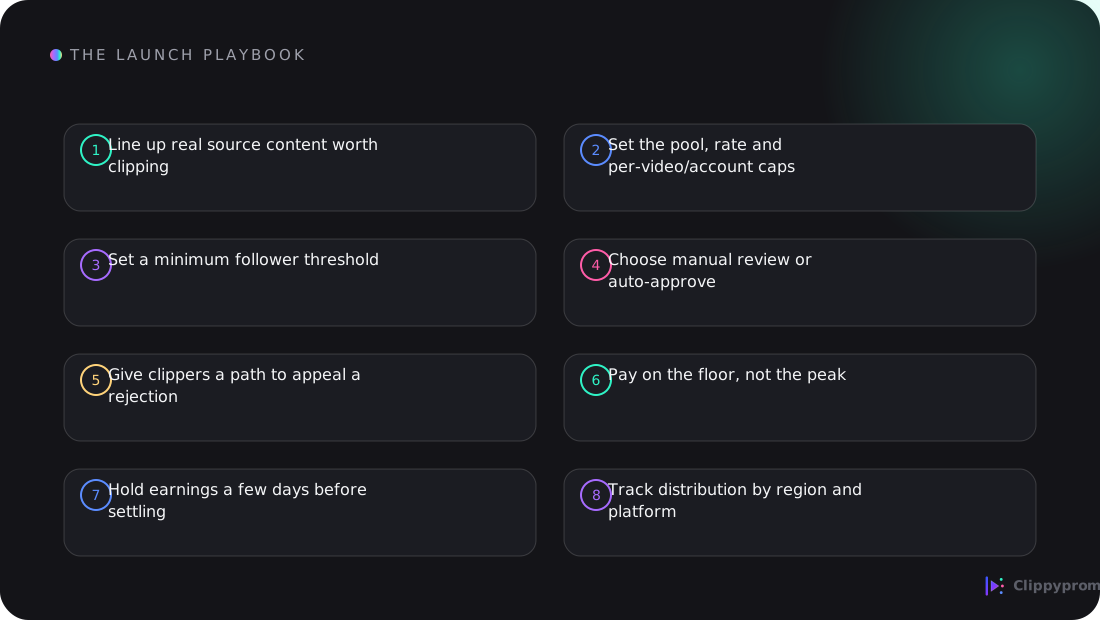
1. Start with source content worth clipping
Clippers can only work with what exists. Before launching a campaign, line up long-form footage with real moments in it: a livestream, a podcast appearance, a demo, an AMA. A single polished ad script rarely gives clippers enough raw, reaction-worthy material to cut interesting clips from.
2. Set the pool, rate and caps before launch
Decide the total budget (the pool), the rate paid per 1,000 verified views, and two caps: a per-video cap so one viral clip cannot drain the whole pool, and a per-account cap so one clipper cannot capture a disproportionate share. These numbers should be visible to clippers upfront so they can judge whether a campaign is worth their time.
3. Set a minimum follower threshold
A minimum follower requirement (commonly around 1,000) filters out throwaway accounts before they can join, without excluding genuinely small but real creators. This is enforced at join time, not connection time, so it does not interfere with a clipper simply linking their account.
4. Decide manual review vs auto-approve
Early campaigns often benefit from manually reviewing submissions to catch quality issues and calibrate what a "good clip" looks like. Once ownership verification and view polling are trusted, auto-approving clips from verified accounts speeds up payouts and reduces admin overhead, especially at higher clipper counts.
5. Let clippers appeal a rejection
Automated and manual review will occasionally get a call wrong. Giving clippers a simple appeal path (resubmit a rejected clip with a note for a second look) keeps good creators in the program instead of losing them to a single bad decision.
6. Pay on the floor, not the peak
Views on short-form platforms can spike and later get purged if the platform removes bot or fraudulent traffic. Structuring payouts around the stabilized, current view count rather than the highest number ever recorded protects the brand's budget without punishing clippers for normal view fluctuation.
7. Hold earnings for a few days before settling
A short hold window (commonly four to seven days) between a clip being approved and its earnings being finalized gives view counts time to stabilize and gives the team time to catch anything unusual before money moves.
8. Watch regional and platform distribution, not just totals
A campaign that looks healthy in aggregate can still be concentrated in one country or one platform. Tracking clipper distribution by region and by platform shows whether a brand's message is actually reaching new geographies or just echoing inside the same audience.
How many clippers does a first campaign need?
There is no fixed number. A small campaign with 20 to 50 active clippers is enough to test whether the source content and rate structure work before scaling the pool and opening it to more creators.
What is the most common mistake in a first clipping campaign?
Launching without enough clip-worthy source material. A campaign with a generous pool but only a single polished ad to clip from gives creators very little to work with, and the resulting clips tend to look identical and underperform.
For the mechanics behind this playbook, see how clipping works, and for the comparison to a single-influencer approach, see clipping vs KOL marketing.
Comments
No comments yet. Be the first.