KOL marketing (paying a Key Opinion Leader, an influencer with an established audience, to promote a brand) has been the default playbook for crypto, AI and SaaS launches for years. Clipping is a newer, complementary model. They are not the same thing, and they are not interchangeable, but they solve different parts of the same problem.
The core difference
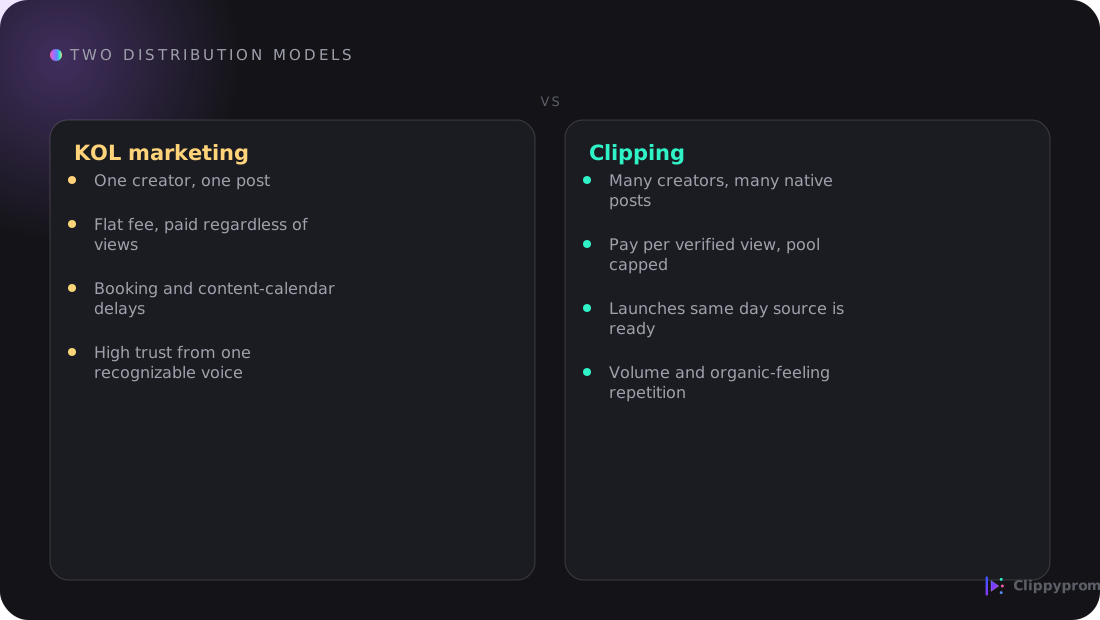
KOL marketing pays for access to one creator's existing audience. Clipping pays for distributed output across many creators, priced by actual performance rather than a flat fee.
Cost structure
A single KOL post can cost anywhere from a few hundred to tens of thousands of dollars, paid regardless of how the post actually performs. A clipping campaign sets a fixed total pool and a rate per 1,000 views, so the brand only pays for views that actually happened, and the total spend is capped from day one.
Reach and volume
One KOL post is one post. A clipping campaign with 100 active clippers can produce 100 or more native posts across as many accounts, each with its own audience, style and platform quirks. Even if any single clip underperforms, the campaign's aggregate reach is rarely dependent on one creator's mood or algorithm luck on a given day.
Speed to launch
Booking a well-known KOL usually means negotiating rates, waiting on their content calendar, and going through revisions. A clipping campaign can go live the same day the source material is ready, since clippers self-select into an open campaign rather than being individually booked.
Authenticity
Audiences are increasingly skeptical of obvious "#ad" posts from a single paid influencer. Clips posted by smaller creators, in their own editing style, from real reaction or commentary, often read as more organic even when the underlying campaign is fully paid and disclosed.
Risk
The biggest risk in KOL marketing is paying upfront for a post that underdelivers, or a creator who never posts on time. The biggest risk in clipping, historically, has been fake views or fake accounts, which is why verified clipping platforms enforce OAuth-based account ownership, a minimum follower threshold, and view counts pulled directly from each platform's API rather than self-reported by the clipper.
When to use which
- Use KOL marketing when you need a specific, trusted voice to vouch for your product to a niche, high-trust audience, and you have budget to pay regardless of exact performance.
- Use clipping when you want volume, native-feeling distribution, and spend that scales with actual views, especially around a launch, an announcement, or an event with a lot of clip-worthy source content.
- Use both. Many crypto, AI and SaaS teams now run a KOL post to seed credibility and a clipping campaign around the same moment to multiply reach.
Is clipping cheaper than KOL marketing?
Usually, per view. Because clipping pays only for verified views up to a pool cap, cost per view is predictable and typically lower than a flat KOL fee divided by that post's actual views, especially when the KOL post underperforms.
Can clipping replace KOL marketing entirely?
For most brands, no. KOL marketing still wins for high-trust endorsement from one recognizable voice. Clipping wins for volume and cost-per-view efficiency. They are typically used together.
See what content clipping is and how a clipping campaign runs for the mechanics behind these numbers.
Comments
No comments yet. Be the first.