Clipping looks simple from the outside (creators post short clips, brands pay for views) but the mechanics that make it trustworthy for both sides happen behind the scenes. Here is the full flow.
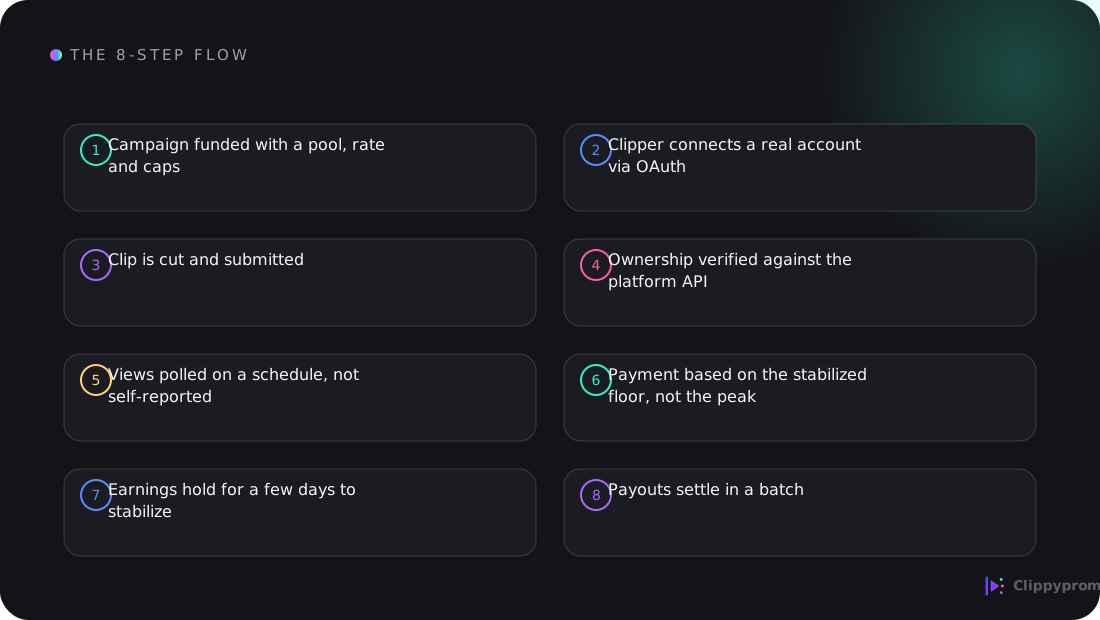
1. A campaign is set up with clear rules
Before any clipper joins, the brand sets the total pool budget, the rate paid per 1,000 verified views, a per-video cap, and a per-account cap. These numbers are visible upfront, so a clipper knows what a clip can realistically earn before making it.
2. Clippers connect a real, eligible account
A clipper connects their TikTok, Instagram, YouTube or X account through that platform's own official login (OAuth), not a shared password. This does two things: it proves the clipper actually owns the account, and it lets the platform read basic public data like follower count, so low-quality or fake accounts can be filtered out before they ever submit a clip.
3. Clips are cut and submitted
The clipper cuts a short clip from the approved source video and posts it natively on their own connected account, then submits the link back to the campaign.
4. Ownership is verified automatically
Before a submission is accepted, the system checks that the submitted video actually belongs to the clipper's own connected account, not a screenshot of someone else's post or a stolen link. This check happens against the platform's own API, not by trusting the clipper's word.
5. Views are polled on a schedule, not self-reported
This is the part that separates clipping platforms from a simple spreadsheet. The system periodically calls each platform's official API to read the actual current view count on the clip. The clipper never types in a number; the platform reads it directly from TikTok, YouTube or Instagram.
6. Payment is based on the stabilized count, not the peak
Views on short-form video are not always stable. A clip can spike and then have views removed later if the platform purges bot or fraudulent traffic. A well-built clipping platform pays on the current, stabilized view count rather than the highest number ever seen, so a brand never overpays for views that were later taken back by the platform itself.
7. Earnings hold, then settle
Earnings sit in a short hold window, typically a few days, before they are finalized. This gives view counts time to stabilize and gives the brand a window to flag anything unusual before money moves.
8. Payouts go out in a batch
Once earnings clear the hold, they are settled and exported in a payout batch to each clipper's wallet.
What stops fake views or fake accounts from getting paid?
Three layers: account ownership is verified through official OAuth before a clip can even be submitted, view counts come from the platform's own API rather than clipper input, and payment is based on the stabilized floor rather than a possibly-inflated peak.
Does the brand have to manually check every clip?
No, verification and view polling run automatically. Manual review is reserved for edge cases and high-payout clips, so a small team can run a campaign with hundreds of clippers without checking every submission by hand.
New to this? Start with what content clipping actually is, or see why brands are shifting spend from single-creator deals with clipping vs KOL marketing.
Comments
No comments yet. Be the first.